
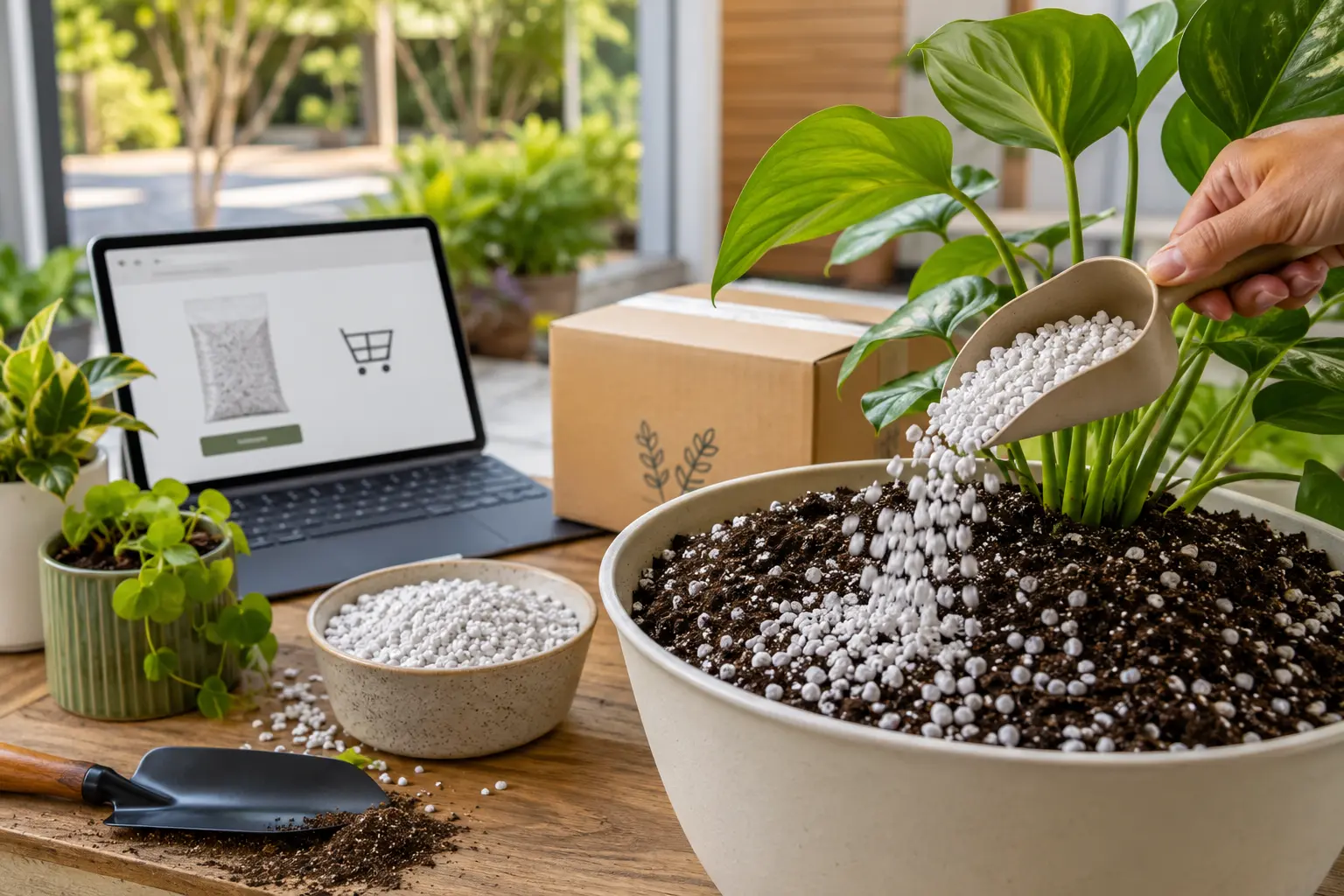
If your growing mix stays wet for too long, compacts easily or feels heavier than it should, perlite can help improve its structure. It creates more air space around roots, helps excess water move through the mix and reduces compaction.
Ashi Homes & Gardens supplies perlite for home gardeners, hobby growers, nurseries and commercial buyers. Different grades suit different growing methods, from seed raising and propagation to container growing, custom soil blends and suitable hydroponic systems.
Whether you need a finer grade for a light propagation mix or a larger grade for sharper drainage, the key is to choose the particle size that matches the job.
Perlite That Helps Roots Breathe, Drains Fast and Mixes Cleanly
Perlite changes the physical structure of a growing mix. Its lightweight particles create spaces within the media, allowing more air to move around the root zone and helping excess water drain.
Gardeners often use perlite to lighten dense potting mixes. Growers may add it to propagation media to improve consistency, while some hydroponic systems use perlite as part of a clean, porous growing medium.
Perlite does not replace every ingredient in a growing mix. Its main purpose is to improve structure. Used appropriately, it can make a dense blend lighter, more open and less prone to compaction.
What perlite does inside a growing mix
Growers commonly add perlite to:
- Improve drainage
- Increase air space around roots
- Reduce compaction
- Lighten dense growing media
- Create a more open propagation mix
- Support suitable hydroponic applications
These benefits can be particularly useful in containers, propagation trays and other growing environments where the media stays wet longer than the plant requires.
The grade and amount needed will depend on the plant, the existing mix, the container and the watering routine.
Who usually buys perlite from us
Perlite is used by a wide range of growers.
Home gardeners may need one bag to improve a potting mix or repot several plants. Hobby growers may use it when preparing custom blends for particular crops. Nurseries and commercial growers may require a consistent grade for repeat propagation or production work.
Although their order sizes differ, these buyers face the same decision: selecting the grade that gives the growing mix the right balance of drainage, aeration and structure.
Choose the Perlite Grade That Matches Your Growing Method
Start with the application rather than the product label.
Ask what the finished mix needs to do:
- Does it need a finer texture for seed raising or propagation?
- Does it need balanced drainage for general container growing?
- Is the existing mix too dense?
- Does the application require larger particles and more air space?
Once you know the result you need, comparing the grades becomes easier.
The supplied product information lists fine, medium, coarse, super-coarse and jumbo perlite options. Confirm the exact particle sizes, bag volumes and availability on the relevant product pages before ordering.
Fine, medium, coarse, super-coarse and jumbo perlite explained
| Perlite grade | General characteristics | Common applications |
| Fine | Smaller particles that spread evenly through finer growing media | Seed raising, propagation and lighter blends |
| Medium | A balanced grade that improves structure without making the mix excessively chunky | General potting mixes and container growing |
| Coarse | Larger particles that create a more noticeable change in drainage and air space | Dense potting mixes and containers needing stronger drainage |
| Super-coarse | A larger grade that creates a more open growing medium | Specialised blends and applications requiring greater air space |
| Jumbo | The largest grade listed in the supplied range | Chunky growing mixes and suitable specialist applications |
This table is a general guide rather than a fixed recommendation. The right grade depends on the crop, container, base mix and watering conditions.
Fine perlite generally suits growers who need smaller particles distributed throughout a light propagation or seed-raising blend.
Medium perlite provides a practical middle ground for general potting mixes. It can improve aeration and drainage without making the media excessively open.
Coarse perlite creates a more noticeable structural change. It may suit dense base mixes or growing conditions where sharper drainage is needed.
Super-coarse and jumbo grades create larger spaces within the mix. They may be suitable for specialised growing media and some hydroponic applications, depending on the crop and system.
There is no single best grade for every plant. Choose according to how the finished growing medium needs to perform.
Why Growers Buy Perlite Instead of Letting Potting Mix Do All the Work
A standard potting mix may work well without modification. However, plants and growing conditions differ.
A mix that suits one plant may hold too much moisture for another. Container size, watering frequency, humidity and the materials already present in the mix can all affect how quickly it drains and how easily it compacts.
Adding perlite allows growers to adjust the structure of an existing mix without replacing it completely.
Better drainage without throwing off the whole mix
Perlite can help create pathways for excess water to move through dense growing media.
This may be useful for container plants and other applications where the root zone should not remain saturated for extended periods. The remaining ingredients can continue to perform their intended roles while the perlite improves drainage and air space.
Perlite should still be used as part of a considered growing mix. Adding more is not automatically better. The right amount depends on the plant and the media already being used.
More aeration where roots need it
Dense or compacted growing media can reduce the air spaces available around roots.
Perlite helps keep the mix more open. This supports airflow through the root zone and may make the media more suitable for plants that require faster drainage.
This structural role is why growers commonly consider perlite for propagation, potting mixes and suitable hydroponic systems.
Perlite for Sale in Australia Without the Guesswork
Choosing perlite becomes easier when you answer three questions:
- Which grade suits the application?
- How much material does the project require?
- Will you need the same grade again for future batches?
A home gardener preparing a small amount of potting mix will have different requirements from a nursery producing repeated batches.
Price matters, but choosing the correct grade and quantity can prevent wasted material and reduce the need to remake an unsuitable mix.
What to look for before you order
Start with the grade. This determines how much the perlite changes the texture and openness of the mix.
Next, check the bag size. Estimate how much growing media you intend to prepare rather than choosing a quantity based only on the lowest upfront cost.
Finally, consider consistency. If you are preparing propagation media, hydroponic media or a repeatable custom blend, using the same grade across batches can make the finished mix easier to manage.
Check each product page for confirmed particle sizes, bag volumes and ordering information before completing your purchase.
From One Bag to Bulk Perlite, We Make Ordering Straightforward
Some customers need one bag for a small home project. Others need larger or repeat quantities for ongoing growing work.
Home gardeners can choose according to the immediate job. Nurseries, trade customers and other repeat buyers may also need to consider future availability and consistency.
For larger orders, contact Ashi Homes & Gardens to confirm quantities, collection options and any relevant purchasing arrangements.
Buying for home use, trade use or nursery volume
For home use, focus on the application, grade and quantity required to complete the project.
For trade or nursery use, consistency becomes more important. Changing particle size between batches may affect how the growing mix drains and handles.
Confirm that the required grade and volume are available before preparing a large or repeat batch.
Order online or contact us for local pickup questions
If you already know which grade you require, select the relevant product and follow the online ordering process.
If you are unsure which grade suits your mix, or you need information about collection or larger quantities, contact Ashi Homes & Gardens before ordering.
When making an enquiry, provide details about the plant, current growing mix, container and drainage problem. This will give the team clearer information to work with.
Where Perlite Fits Best Across Propagation, Potting Mixes and Hydroponics
Perlite can be used in several growing applications, but its role changes according to the system.
In propagation media, it may help maintain a more open structure and reduce compaction.
The Australian National Botanic Gardens uses a perlite-to-coir cutting medium of 9:1 in winter and 5:1 in summer. This nursery-specific formulation shows how professional growers may adjust the proportion of perlite according to seasonal growing conditions.
In general potting blends, it can improve drainage and create more air space within a dense base mix.
In suitable hydroponic systems, perlite may be used as part of a porous growing medium. Suitability depends on the crop, irrigation method and system design.
For custom soil or growing-media blends, the chosen grade should complement the other ingredients rather than overwhelm them.
Consider:
- The plant or crop
- The container size
- The existing growing medium
- The watering frequency
- The required drainage rate
- The intended growing system
When choosing a grade, start with the problem you are trying to solve. A finer grade may suit a light propagation mix, while a larger grade may be more appropriate when the main goal is creating additional air space.
Ready to Buy the Right Perlite for the Way You Grow
Perlite can improve drainage, increase air space and reduce compaction in a growing mix. The most important decision is choosing a grade that suits the plant, base media and growing method.
Compare the available fine, medium, coarse, super-coarse and jumbo options before ordering. Check the particle size, bag volume and stated applications on each product page.
Browse the perlite range from Ashi Homes & Gardens, or contact the team if you need help comparing grades, discussing larger quantities or asking about collection options.
What Buyers Usually Want to Know Before They Place the Order
Which perlite grade should I buy for seedlings or propagation?
A finer grade is generally the most suitable starting point for seed raising and propagation mixes because smaller particles distribute more evenly through fine media.
The final choice still depends on the other ingredients and how open the finished mix needs to be.
What is the difference between fine, medium, coarse, super-coarse and jumbo perlite?
The main difference is particle size.
Fine and medium grades create a more even texture in lighter growing media. Coarse, super-coarse and jumbo grades create larger spaces and a chunkier structure.
Larger particles generally create a more open mix, but the right choice depends on the plant, container and base media.
Can I buy perlite in bulk?
Contact Ashi Homes & Gardens to confirm larger-order availability, quantities and any relevant collection or delivery arrangements.
Confirm supply before planning a large or repeat batch.
Is perlite suitable for hydroponics?
Perlite can be used in some hydroponic growing systems.
Its suitability depends on the crop, irrigation method and system design. Check the product information and confirm that the grade is appropriate for your setup before ordering.
Do I still need perlite if I already have a premium potting mix?
Not necessarily.
A good potting mix may already provide suitable drainage and aeration. Perlite may be useful if the existing mix stays wet for too long, compacts easily or needs a more open structure.
Assess how the mix performs before adding another component.





